How to Use a Knee Massager Safely: A Practical Guide
· By Dana Whitfield
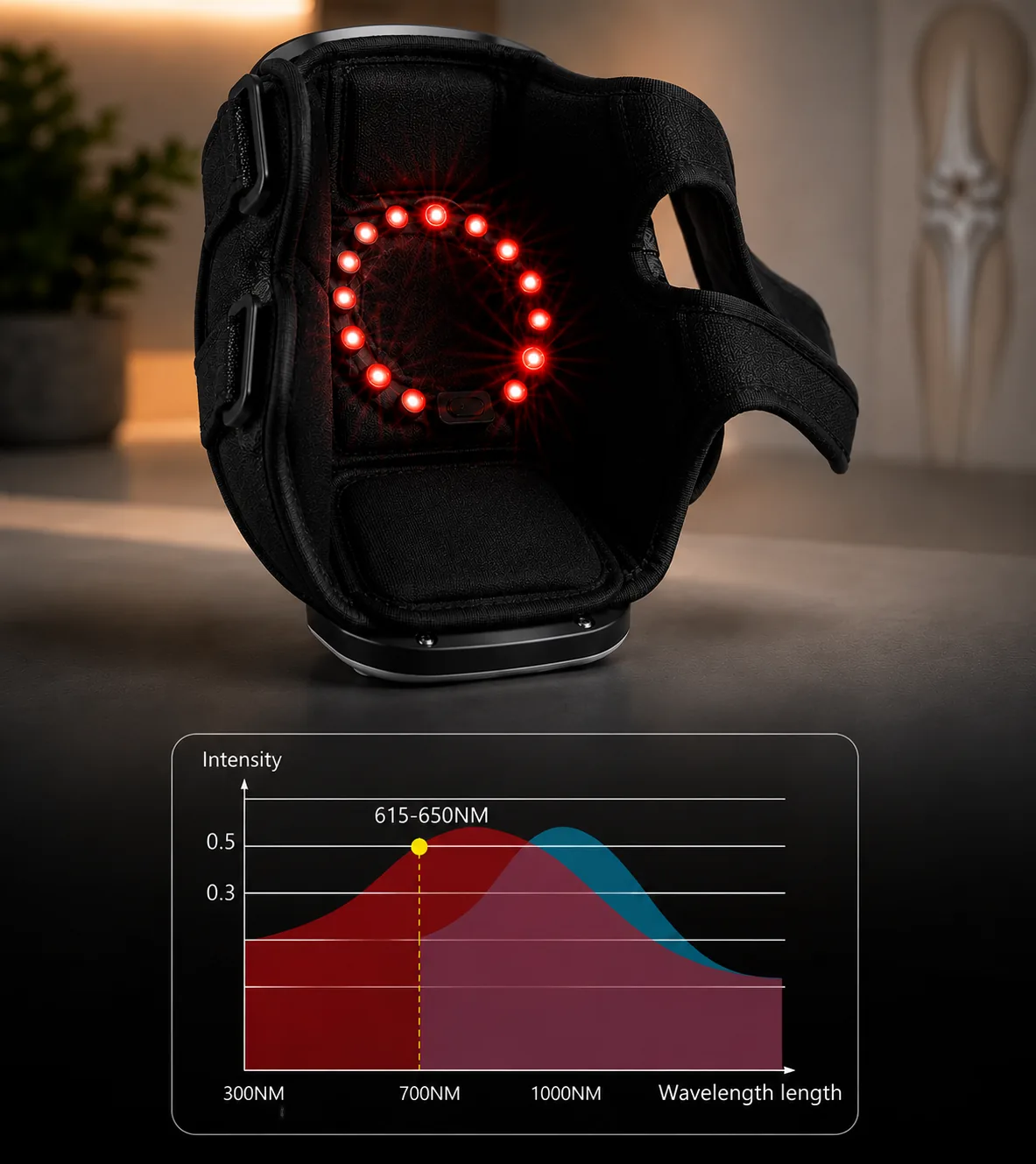
A wrap that combines LED red and infrared light, heat, and three levels of vibration is simple to use, but a handful of common-sense habits make it safer and more comfortable from the first session onward. This guide walks through realistic session lengths, skin and circulation precautions, sizing, and the situations worth a quick call to your doctor before you strap in, along with a few honest notes from real buyers about what to expect.
How long should a session last?
There's no need to wear a knee wrap all afternoon to get value out of it. A sensible starting point for a heat-and-vibration session is about 15 to 20 minutes at a time, then removing it and checking how your skin and knee feel before deciding whether to use it again later. Longer isn't automatically better: extended, continuous heat contact is what raises the risk of skin irritation, not the total number of times you use the device across a day.
If you're new to the GlowKnee knee wrap, start even shorter. Run your first session at a low heat and vibration level for about 10 minutes, then work up toward a full session once you know how your skin responds.
Typical maximum length recommended for a single superficial heat therapy session in physical medicine guidance
— American Academy of Physical Medicine & Rehabilitation, PM&R KnowledgeNow, 2024
Skin sensitivity: what to check first
Before your first session, test the heat setting somewhere you can watch it closely, and pay attention to how your skin looks and feels for the first few uses. Mild pinkness that fades within a few minutes after use is a normal response to heat and is nothing to worry about. Redness that lingers, itching, a rash, or any blistering is not, and means you should stop using the wrap on that spot and check in with a doctor before trying again.
Skip the wrap entirely over broken skin, a rash, an active skin infection, or a fresh bruise or injury that's still swollen. Heat and pressure on compromised skin can make irritation worse rather than better. This is comfort equipment for intact, healthy skin around the knee, not a treatment for skin conditions or open injuries. For more on how the light and heat functions are meant to work together, see our guide to red light therapy for knee pain.
Who should check with a doctor first
A knee wrap like this is built for everyday comfort, not for managing a diagnosed medical condition, so a few groups of people should talk to a doctor before adding it to their routine. Physical medicine guidance on superficial heat therapy generally advises caution or avoidance for people with peripheral vascular disease, bleeding disorders, acute inflammation or fresh trauma, open wounds or infections, or impaired sensation such as the neuropathy that can come with diabetes, since reduced feeling in the leg makes it harder to notice overheating before it causes harm.
If you have a chronic circulatory condition, are pregnant, or have an implanted electronic medical device, the safest move is a quick question to your doctor before you start, rather than guessing. None of this is a diagnosis or a substitute for professional medical care. If you're managing ongoing joint pain from arthritis specifically, our guide on a knee massager for arthritis covers how an at-home comfort device like this one fits alongside, not instead of, care from your doctor.
Getting the right fit
The adjustable velcro straps are designed to fit around the knee joint snugly, without gaps, but not so tight that you feel numbness, tingling, or a pins-and-needles sensation in your lower leg or foot. If you notice any of those signs, loosen the straps immediately.
One verified buyer told us the wrap ran big: "It heats fine, but the size was very big, even for most people, perhaps order the small one." That's an honest, recurring note worth planning around. Before you order, check the sizing details on the product page, and if you're on the smaller side or have a narrower knee, size down rather than assuming a one-size fit will sit snugly.
What to expect: noise and vibration
A cordless wrap that packs a heating element, a vibration motor, and control electronics into a soft strap is not going to run silently, and it's worth knowing that before your first session rather than being surprised by it. Verified buyers describe it as working as expected but noisy: one wrote, "It works, heats, and massages as described. One drawback is that it's extremely noisy," and another summed it up simply as, "Vibrates, heats up." A third buyer mentioned the same trait in passing while describing sizing: "It is noisy, so I've only used it for heating once."
In practice, that means an audible motor hum while the vibration function runs, similar to what you'd expect from any small motorized massage device. Playing background music, turning on the TV, or wearing headphones works fine for most users who want to use it while relaxing rather than in a quiet room. See what other verified buyers said in our reviews.
A quick safety checklist
| Do | Don't | Why it matters |
|---|---|---|
| Test the heat setting somewhere you can watch closely before your first full session. | Assume the highest heat and vibration level is fine on day one. | Easing in lets you learn how your skin responds before increasing intensity. |
| Keep sessions to about 15-20 minutes at a time. | Leave it running for hours "just in case." | Extended, continuous heat contact is what raises burn and irritation risk. |
| Check your skin for redness or irritation after each use. | Ignore lingering redness, numbness, or discomfort. | Early skin changes are the easiest warning sign to catch. |
| Use it only on intact, healthy skin around the knee. | Wrap it over an open wound, rash, active infection, or fresh injury. | Heat and pressure can aggravate compromised skin. |
| Check with your doctor first if you have diabetes, a circulatory condition, or reduced sensation in your leg. | Assume it's automatically fine for every chronic health condition. | Some conditions make it harder to notice overheating or irritation early. |
Step-by-step: your first session
- Check the sizing details on the product page against your knee, keeping in mind the "runs big" feedback above.
- Sit or lie down somewhere comfortable, wrap the massager around your knee, and secure the velcro straps snugly, not tight enough to restrict circulation.
- Turn on the LED touchscreen control panel and start on the lowest heat and vibration level.
- Run it for about 10 minutes on your first try, paying attention to how the heat and vibration feel against your skin.
- If everything feels comfortable, work up toward a full 15-20 minute session on later uses, adjusting the heat and vibration levels from the touchscreen as you go.
- Remove the wrap and check your skin. Mild, quickly fading pinkness is a normal response to heat; anything that lingers, itches, or blisters means you should stop and check with a doctor before your next use.
Common mistakes to avoid
- Jumping straight to the highest heat and vibration setting instead of easing in over the first few sessions.
- Securing the straps tight enough to cause numbness or tingling in the lower leg or foot.
- Using the wrap directly over a fresh bruise, an actively swollen injury, or broken skin.
- Skipping the after-use skin check, especially during your first week with the device.
- Ignoring the "runs a bit big" sizing note and wearing it loose enough that it slides around during a session.
of US adults have diagnosed arthritis, one common reason people look for at-home knee comfort routines in the first place
— CDC/NCHS Data Brief No. 497, Elgaddal et al., 2024
Quick safety FAQ
Is the GlowKnee wrap loud?
It's not silent. Several verified buyers describe an audible motor hum while the vibration function runs, alongside noting that the heat and massage work as described. Playing music or wearing headphones works fine for most people who want to use it while relaxing.
Does it actually use a laser?
No. The GlowKnee wrap uses LED-based red and infrared light, not a laser. Some supplier marketing has loosely used the word "laser," but the light source is LED, which is the more common and lower-risk technology used in home light-therapy devices.
How long should each session run?
A common-sense starting point is about 15-20 minutes at a time, shorter for your very first session while you learn how your skin and knee respond. There's no benefit to leaving it on for hours at a stretch.
What if it feels too big?
A few verified buyers note it runs on the larger side. Check the sizing details on the product page before you order, and secure the straps snugly rather than loosely so it doesn't shift during a session.
Can I use it if I have a health condition?
Talk to your doctor first if you have diabetes, a circulatory condition, an implanted medical device, or reduced sensation in your leg. This device is comfort equipment, not a medical treatment, and it isn't a substitute for professional medical advice.
See how we evaluate every product on our how we test page.